Within UFO Crashes
Can Debris Prove a UFO Crash?
Material claims only become persuasive when samples have provenance, custody, repeatable testing, and ordinary explanations ruled out.
On this page
- Where recovered material claims break down
- What independent testing can show
- Why provenance matters as much as composition
Page outline Jump by section
Introduction
Debris testing can strengthen a UFO crash claim, but it has not yet produced public, repeatable proof of a non-human craft. The strongest material cases show why: a fragment can be chemically unusual, layered, highly pure, or difficult to identify, yet still fail as crash evidence if its origin, handling, custody and comparison samples are weak. In alleged UFO recoveries, laboratory composition is only half the question. The other half is provenance: who found the material, where, when, under what documented conditions, and whether ordinary sources such as balloons, aircraft, industrial alloys, hoaxes or contamination have been ruled out.
That distinction is crucial because recent official and independent tests have been able to say useful things about alleged debris, but mostly in a limiting direction: some samples are manufactured, some are terrestrial, some are inconclusive, and none publicly demonstrates a recovered extraterrestrial vehicle. AARO’s 2024 historical review said it found no empirical evidence that any government, private, academic or foreign UAP investigation had verified recovered extraterrestrial craft or beings.[AARO]aaro.milUnclassified Final DSD AARO Historical ReportUnclassified Final DSD AARO Historical Report
Where recovered material claims break down
The popular idea of UFO crash debris is simple: find a fragment, test it, and let the laboratory settle the case. Real evidence does not work that cleanly. A laboratory can describe what a sample is made of, but it cannot automatically prove that the sample came from a crash, a vehicle, a particular date, or an extraordinary event. That link has to be built outside the instrument, through documentation.
The usual weaknesses appear again and again:
- No secure recovery scene. The sample is often said to have been picked up after an event, but the location is not protected, photographed, mapped, sampled systematically or tied to a verified impact site.
- Late or indirect custody. Material may pass through witnesses, collectors, investigators, journalists or private organisations before testing. Each transfer creates room for substitution, contamination or mistaken attribution.
- Unclear comparison universe. “Unusual” can mean rare in everyday life, not impossible in aerospace, metallurgy, pyrotechnics, electronics, industrial waste or classified testing.
- Testing answers a narrower question than the claim. A result such as “layered bismuth and magnesium” or “high-purity magnesium” may be interesting, but it does not by itself establish propulsion, flight history, non-human manufacture or crash origin.
- Missing negatives matter. If no burn pattern, impact geometry, associated wreckage field, serialised parts, official recovery record or sensor record exists, a sample must carry an evidential burden it cannot usually carry alone.
This is why Roswell remains instructive even when the focus is debris rather than the wider legend. The Government Accountability Office found two 1947 records directly concerning the Roswell event: a unit history saying the recovered “flying disc” was later determined to be a radar-tracking balloon, and an FBI teletype describing a high-altitude balloon with a radar reflector. The GAO also found no Air Materiel Command records showing examination of Roswell crash debris at Wright Field.[FAS Project on Government Secrecy]sgp.fas.orgProject on Government Secrecy GAO Report on Roswell, NM UFO CrashProject on Government Secrecy GAO Report on Roswell, NM UFO Crash
That does not prove every later witness was lying, but it shows how material claims are judged. If the documented recovery trail points to balloon equipment, and no contemporary record supports exotic debris examination, later fragments or memories have to overcome a strong ordinary explanation. The Air Force’s Project Mogul explanation is also relevant because balloon trains and radar reflectors could scatter lightweight, unfamiliar-looking material without requiring an alien craft.
What independent testing can show
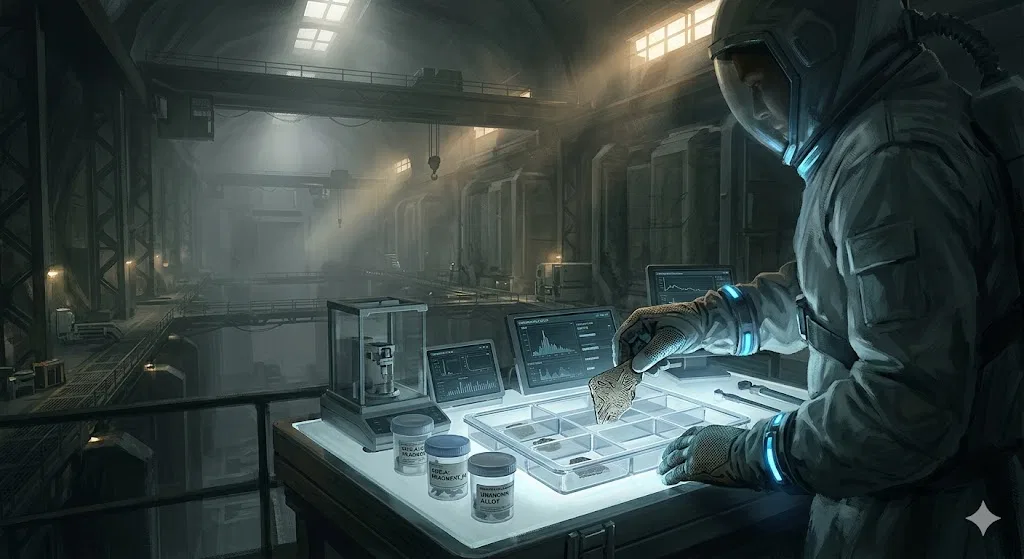
Laboratory testing is still valuable. It can expose hoaxes, identify ordinary alloys, detect contamination, show whether a sample was manufactured, and sometimes narrow a possible period or industrial process. In the best cases, it can also test specific extraordinary claims. The 2024 Oak Ridge National Laboratory analysis of a metallic specimen associated with alleged crashed UAP material is the clearest recent example.
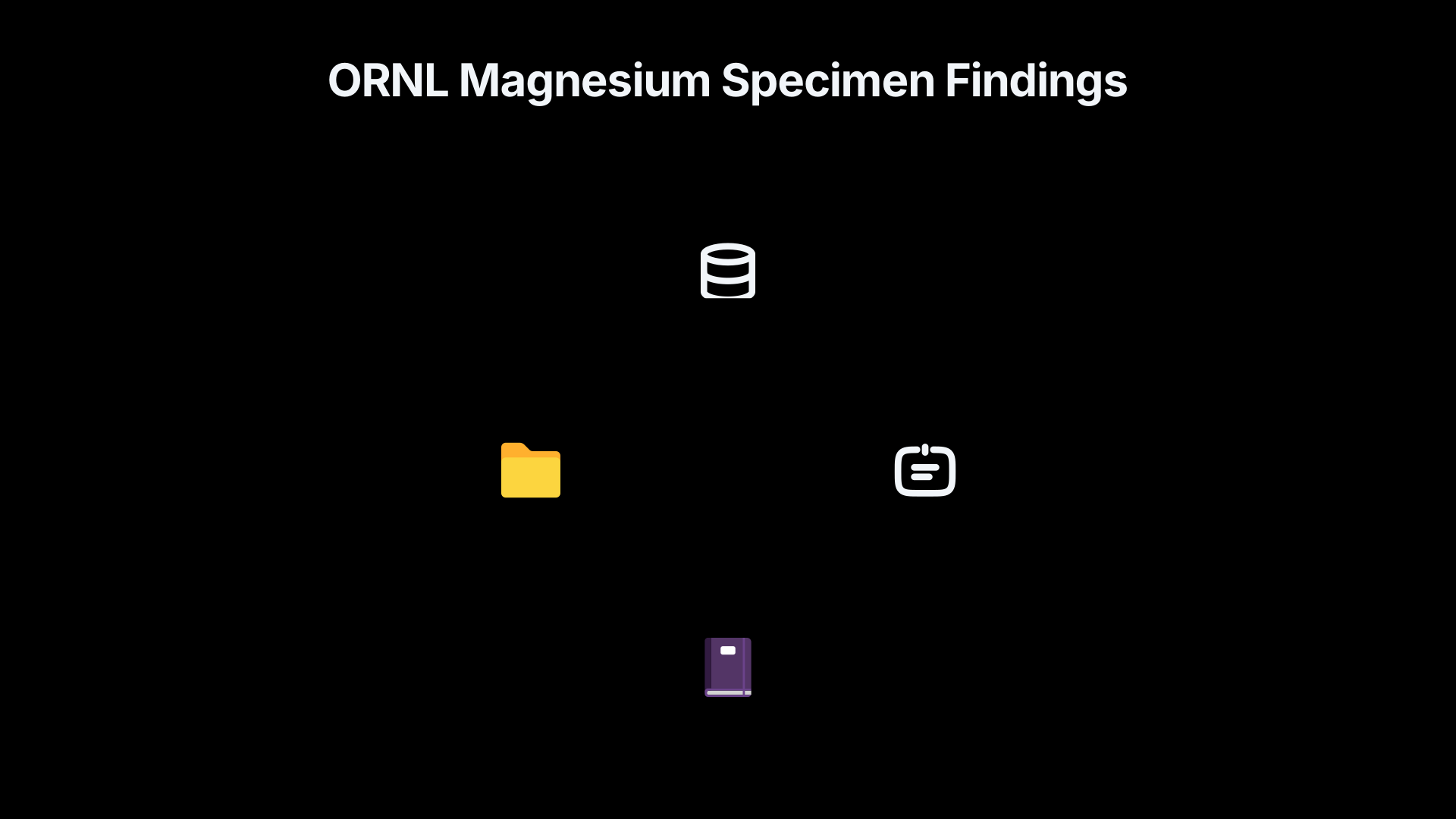
AARO asked ORNL to assess a magnesium alloy specimen that had been publicly alleged to be a component from a crashed extraterrestrial vehicle in 1947 and was said to have extraordinary properties, including possible function as a terahertz waveguide linked by proponents to “antigravity” claims. ORNL examined structure, composition and isotope ratios using microscopy, spectroscopy and spectrometry. It reported that the data strongly supported terrestrial origin and that the bismuth layers did not meet the requirements to function as a terahertz waveguide.[AARO]aaro.milSynopsis: Analysis of a Metallic SpecimenSynopsis: Analysis of a Metallic Specimen
The important point is not simply that the sample “failed” an alien test. It is that a dramatic claim was converted into testable questions: Are the isotope ratios consistent with Earth materials? Is the bismuth present in the form needed for the proposed waveguide behaviour? Does the structure match the claimed function? ORNL found the magnesium and lead isotope composition consistent with terrestrial manufactured materials; the magnesium signature lay within expected terrestrial fractionation trends, and the lead signature matched common terrestrial lead rather than lunar or non-terrestrial material.[AARO]aaro.milSynopsis: Analysis of a Metallic SpecimenSynopsis: Analysis of a Metallic Specimen
The sample was not therefore uninteresting. It was layered, manufactured and evidently subjected to stress or alteration. AARO’s supplement said its characteristics were consistent with mid-20th-century magnesium alloy research and experimental manufacturing methods, even though ORNL and AARO could not determine whether it was a fragment of a larger object.[AARO]aaro.mils Supplement to Oak Ridge National Laboratory's Analysis of a Metallic Specimens Supplement to Oak Ridge National Laboratory's Analysis of a Metallic Specimen That is a typical outcome in debris testing: the lab may leave a narrower historical puzzle while removing the most extraordinary interpretation.
The same distinction appears in To The Stars Academy’s earlier public framing of the magnesium-zinc-bismuth material. TTSA said the accompanying provenance documentation could not be independently verified, but argued that testing might still look for unusual alloys, isotope ratios indicating creation outside the solar system, or unusual structural composition.[To The Stars*]tothestars.mediaTo The Stars*Material of Interest: Magnesium-Zinc-BismuthTo The Stars*Material of Interest: Magnesium-Zinc-Bismuth After the ORNL work, TTSA’s own public analysis acknowledged that the testing did not reveal proof of exotic origin, while maintaining that the material’s exact purpose remained uncertain.[To The Stars*]tothestars.mediaTo The StarsTTS Analysis on ORNL ReportTo The StarsTTS Analysis on ORNL Report
That is a useful evidential boundary. “Purpose unknown” is not the same as “non-human origin”. A manufactured object can be mysterious because documentation is missing, because it came from an obscure research programme, because it is a failed experiment, or because it has degraded since manufacture. Debris testing is strongest when it separates those possibilities rather than collapsing them into one extraordinary conclusion.
The Ubatuba fragments show the promise and the trap
The Ubatuba magnesium case is often cited because it involves physical fragments, repeated testing and a striking origin story. In 1957, a Brazilian newspaper reportedly received pieces said to come from a supposed flying disc that exploded over the sea near Ubatuba. Later accounts describe light, greyish metal fragments that were passed through UFO investigators and eventually tested by several laboratories. The case is important not because it proves a UFO crash, but because it shows how even decades of testing can leave the decisive question unresolved.
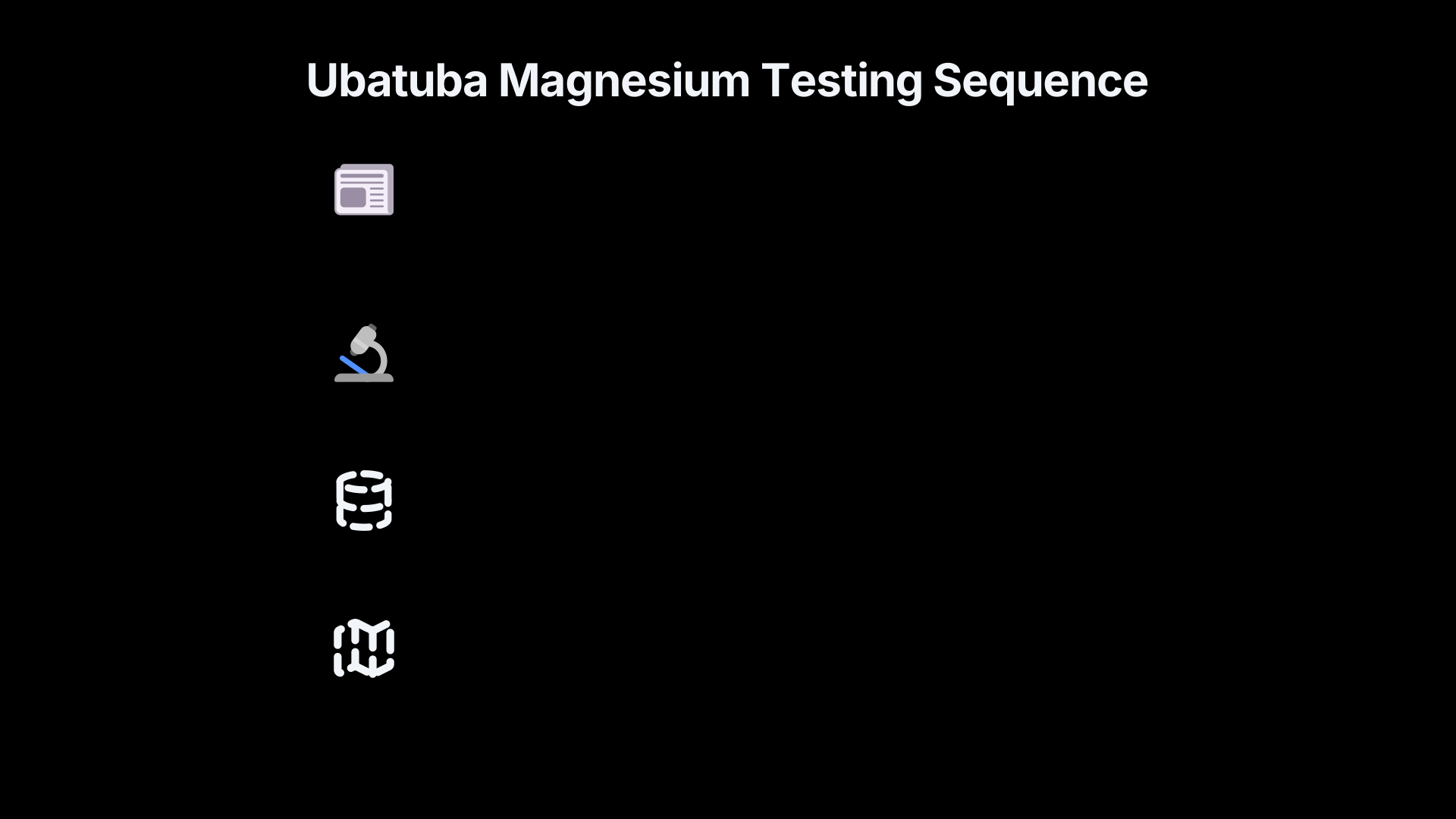
A 2022 Journal of Scientific Exploration paper reviewed earlier testing and performed newer isotope work. It reported that early analyses found very high-purity magnesium, but also trace elements; one early impression that the material was “100% magnesium” was later treated as an erroneous conclusion caused by the limits of the equipment then used. ORNL tested a sample in 1958 and found magnesium purity of about 99.8%, with trace elements including iron, silicon, aluminium, calcium and copper; Dow Chemical later found magnesium at about 99.98% with traces including strontium and barium.[Journal of Scientific Exploration]journalofscientificexploration.orgJournal of Scientific Exploration
The interesting feature was not “alien metal” but the combination of high-purity magnesium and trace impurities such as strontium. The 2022 authors noted that earlier isotope results contained serious problems: one 1968 magnesium isotope measurement was later judged a failed attempt, and later tests produced inconsistent results. In the newer work, one laboratory’s magnesium isotope values appeared off-trend, while a second laboratory’s results fell along the same diagonal line as terrestrial samples; the authors judged that an error most likely occurred in the first lab’s magnesium isotope measurement.[Journal of Scientific Exploration]journalofscientificexploration.orgJournal of Scientific Exploration
That makes Ubatuba a good example of why repeatability matters. A surprising isotope value is not persuasive until it survives independent replication, error estimates and comparison against standards. The 2022 paper gave more weight to the second lab for several measurements and described inconsistent isotope values in trace metals between labs, possibly related to the challenge of measuring low-level trace elements in a sample dominated by magnesium.[Journal of Scientific Exploration]journalofscientificexploration.orgJournal of Scientific Exploration
The authors still considered the sample interesting, noting that it remained unclear how high-purity magnesium with strontium impurities reached a Brazilian newspaper in 1957.[Journal of Scientific Exploration]journalofscientificexploration.orgJournal of Scientific Exploration But the evidential gap is exactly the point. A material can be puzzling and still not be tied securely to a UFO crash. Without a documented recovery site, contemporaneous photographs, controlled sampling, witness-to-sample continuity and exclusion of terrestrial magnesium sources, the laboratory puzzle does not become crash proof.
Why provenance matters as much as composition
Composition can identify what a sample is. Provenance explains why anyone should believe it belongs to the event. In alleged UFO crash debris, provenance usually carries the decisive burden because many materials that seem strange outside a laboratory are ordinary somewhere in the industrial world.
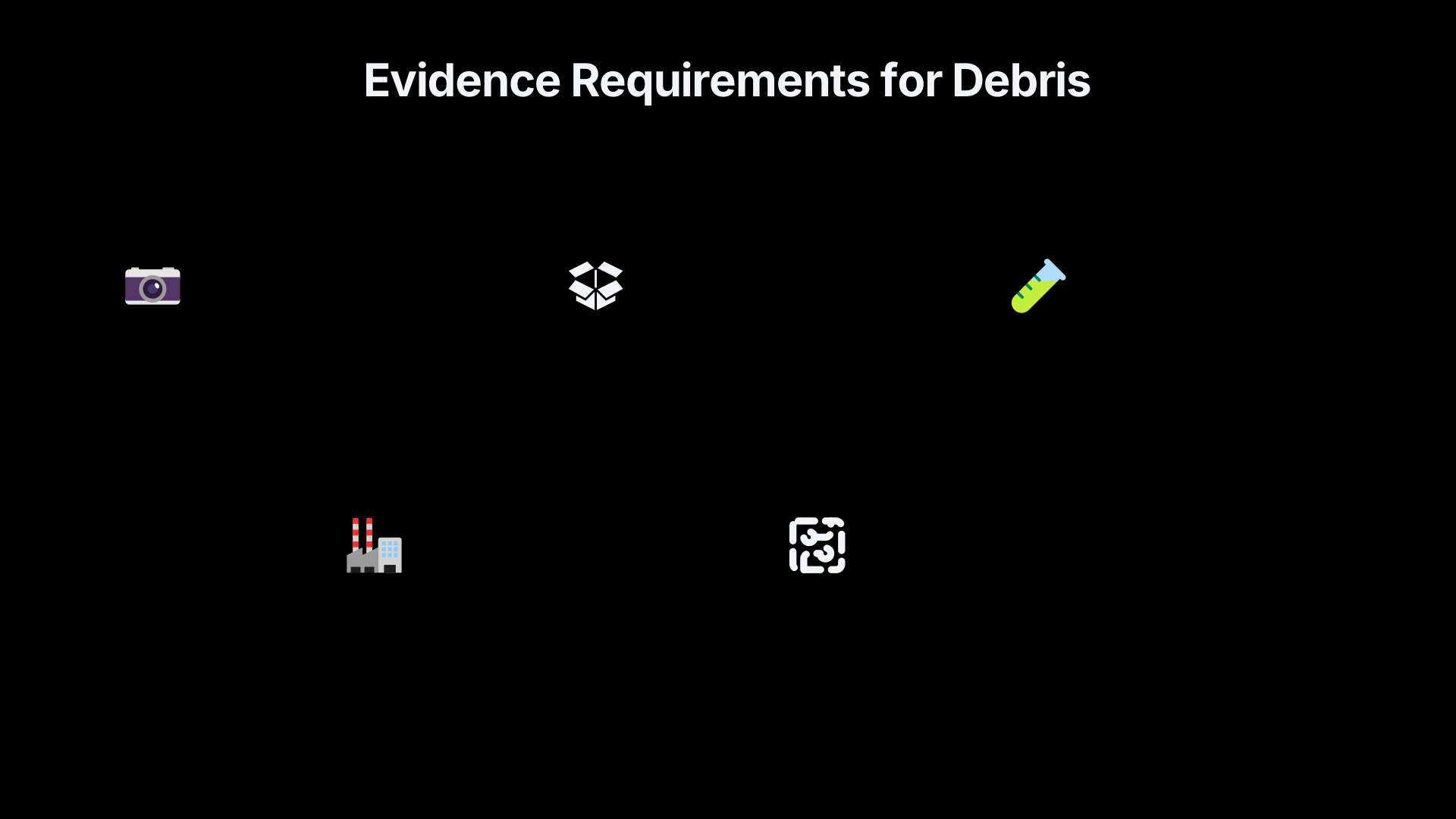
A strong debris case would need several layers of support:
- Contemporaneous recovery documentation. The sample should be tied to a dated incident by photographs, maps, reports, witness statements, police or military logs, and ideally multiple independent records.
- Controlled chain of custody. Each handoff should be documented, with packaging, labels, storage conditions and evidence seals where possible.
- Contextual sampling. Investigators should collect soil, vegetation, nearby industrial debris and control samples, not just the most dramatic fragment.
- Repeatable independent testing. More than one qualified lab should test split samples using appropriate standards, blind controls and error estimates.
- Ordinary-source exclusion. Aerospace, military, meteorite, industrial, pyrotechnic and environmental explanations should be tested actively rather than mentioned and dismissed.
- Claim-specific tests. If proponents say the material is an engineered waveguide, a propulsion component or extra-solar matter, the tests should be designed around those exact claims.
NASA’s 2023 UAP independent study made a similar point about UAP evidence more broadly: analysis is hampered by poor sensor calibration, lack of multiple measurements, lack of sensor metadata and lack of baseline data.[NASA Science]science.nasa.govOpen source on nasa.gov. That lesson applies directly to debris. A fragment without recovery metadata is like a video without camera metadata: it may be intriguing, but the missing context sharply limits what can be concluded.
The older Condon Report reached a comparable standard-of-proof issue when discussing direct physical evidence. It noted that ground marks, “nests” and alleged traces could sometimes be real physical effects, but if human, animal, lightning or other natural explanations could account for them, the burden remained on the person claiming an extraordinary origin.[NCAS PDF Directory]files.ncas.orgPDF DirectoryCondon Report Section III, Chapter 3: Direct Physical Evidence… Debris should be treated the same way. The question is not whether a sample is unusual; it is whether the unusualness is best explained by a crashed UFO rather than by a more ordinary chain of events.
What would make a debris case persuasive
A persuasive debris case would not depend on a single spectacular laboratory result. It would look more like an accident investigation than a treasure hunt. The strongest scenario would involve an observed event, a secured scene, rapid collection, split samples sent to independent laboratories, full documentation of custody, and results that repeatedly contradict known terrestrial sources. If isotope ratios were far outside solar-system norms, if microstructure had no plausible manufacturing path, and if the material were physically integrated with other documented wreckage, the claim would become much harder to dismiss.
Even then, the result would need careful phrasing. “Not yet identified” is not the same as “extraterrestrial”. “Manufactured” is not the same as “non-human”. “Advanced” is not the same as “impossible for humans”. “Classified origin” is not the same as “alien origin”. Debris testing earns credibility by moving step by step from broad claims to narrower, falsifiable conclusions.
So far, the public record points the other way. Roswell’s best contemporary records support balloon-related debris rather than an examined alien craft. Ubatuba remains an interesting but provenance-limited magnesium case with inconsistent isotope-testing history. The magnesium-zinc-bismuth “Art’s Parts” material was found by ORNL and AARO to be terrestrial and not to meet the theoretical requirements claimed for a terahertz waveguide. FAS Project on Government Secrecy+2Journal of Scientific Exploration[sgp.fas.org]sgp.fas.orgProject on Government Secrecy GAO Report on Roswell, NM UFO CrashProject on Government Secrecy GAO Report on Roswell, NM UFO Crash
That does not make debris testing pointless. It makes it one of the most useful filters in the UFO crash field. Good testing can reduce speculation, separate folklore from material facts, and identify what would be required for a future sample to matter. The core lesson is simple: alleged UFO debris becomes persuasive only when the material result and the history of the sample support each other. When either half is missing, the evidence remains suggestive at best.
Amazon book picks
Further Reading
Books and field guides related to Can Debris Prove a UFO Crash?. Use these as the next step if you want deeper reading beyond the article.
eBay marketplace picks
Marketplace Samples
Live-tested eBay searches with available results related to this page.




Endnotes
1.
Source: aaro.mil
Title: Unclassified Final DSD AARO Historical Report
Link:https://www.aaro.mil/Portals/136/PDFs/AARO_Historical_Record_Report_Vol_1_2024.pdf
2.
Source: sgp.fas.org
Title: Project on Government [Secrecy]({{ ‘secrecy/’ | relative_url }}) GAO Report on Roswell, NM UFO Crash
Link:https://sgp.fas.org/othergov/roswell.html
3.
Source: aaro.mil
Title: Synopsis: Analysis of a Metallic Specimen
Link:https://www.aaro.mil/Portals/136/PDFs/Information%20Papers/ORNL-Synopsis_Analysis_of_a_Metallic_Specimen.pdf
4.
Source: aaro.mil
Title: ‘s Supplement to Oak Ridge National Laboratory’s Analysis of a Metallic Specimen
Link:https://www.aaro.mil/Portals/136/PDFs/Information%20Papers/AAROs_Supplement_to_ORNLs_Analysis_of_a_Metallic_Specimen.pdf
5.
Source: journalofscientificexploration.org
Title: Journal of Scientific Exploration
Link:https://journalofscientificexploration.org/index.php/jse/article/view/2415/1565
6.
Source: science.nasa.gov
Link:https://science.nasa.gov/wp-content/uploads/2023/09/uap-independent-study-team-final-report.pdf
7.
Source: files.ncas.org
Title: PDF Directory
Link:https://files.ncas.org/condon/text/s3chap03.htm
Source snippet
Condon Report Section III, Chapter 3: Direct Physical Evidence...
8.
Source: aaro.mil
Title: UAP Records
Link:https://www.aaro.mil/UAP-Records/
9.
Source: aaro.mil
Title: Official UAP Imagery
Link:https://www.aaro.mil/UAP-Cases/Official-UAP-Imagery/
10.
Source: science.nasa.gov
Link:https://science.nasa.gov/uap/
11.
Source: nasa.gov
Title: update nasa shares uap independent study report names director
Link:https://www.nasa.gov/news-release/update-nasa-shares-uap-independent-study-report-names-director/
12.
Source: tothestars.media
Title: To The Stars*Material of Interest: Magnesium-Zinc-Bismuth
Link:https://tothestars.media/blogs/press-and-news/material-of-interest-magnesium-zinc-bismuth?srsltid=AfmBOopfNWcVXlUV7PETHBBDvXGNDZwMS6xIMzNc86gvonBlOYPnM_xU
13.
Source: tothestars.media
Title: To The StarsTTS Analysis on ORNL Report
Link:https://tothestars.media/blogs/press-and-news/tts-analysis-on-ornl?srsltid=AfmBOor86gE_WkT9iaAbZD9mXwXlF7_Te7aKjPpn77meWOkpsKs7lC0F
14.
Source: Wikipedia
Title: Project Mogul
Link:https://en.wikipedia.org/wiki/Project_Mogul
15.
Source: journalofscientificexploration.org
Link:https://journalofscientificexploration.org/index.php/jse/article/view/2415
16.
Source: theblackarchive.net
Link:https://theblackarchive.net/en/case/14
Additional References
17.
Source: youtube.com
Title: David Grusch Claims Government Found ‘Nonhuman Biologics’ On Crashed UFOs
Link:http://www.youtube.com/watch?v=slLm4WhYhq0
Source snippet
Garry Nolan UFO debris material testing Jacques Valles & Garry Nolan test debris from UFO/UAP Crashsights 369-EFV-YT...
18.
Source: arxiv.org
Link:https://arxiv.org/html/2502.06794v2
19.
Source: youtube.com
Title: Jacques Valles & Garry Nolan test debris from UFO/UAP Crashsights
Link:http://www.youtube.com/watch?v=KWPwjNOMN-U
Source snippet
New UAP Materials Tests: What the Results Reveal | Dr. Garry Nolan...
20.
Source: youtube.com
Title: New UAP Materials Tests: What the Results Reveal | Dr. Garry Nolan
Link:http://www.youtube.com/watch?v=Mifx4nzPY68
Source snippet
How To Scientifically Test & Analyze Potential UAP/UFO Material...
21.
Source: youtube.com
Title: Pentagon’s new UFO files show no evidence of aliens found
Link:http://www.youtube.com/watch?v=yY-iebpKygk
Source snippet
David Grusch Claims Government Found 'Nonhuman Biologics' On Crashed UFOs...
22.
Source: youtube.com
Title: How To Scientifically Test & Analyze Potential UAP/UFO Material
Link:http://www.youtube.com/watch?v=SbAtCzZIIsk
Source snippet
Pentagon's new UFO files show no evidence of aliens found...
23.
Source: cia.gov
Link:https://www.cia.gov/readingroom/document/cia-rdp81r00560r000100010001-0
24.
Source: war.gov
Title: department of war releases [unidentified]({{ ‘unidentified/’ | relative_url }}) anomalous phenomena files in historic t
Link:https://www.war.gov/News/Releases/Release/Article/4480582/department-of-war-releases-unidentified-anomalous-phenomena-files-in-historic-t/
25.
Source: researchgate.net
Link:https://www.researchgate.net/publication/362854511_A_Grounded_Theory_Update_on_the_Roswell_UFO_Incident
26.
Source: facebook.com
Link:https://www.facebook.com/nbc10/posts/a-new-ufo-report-says-there-is-no-evidence-for-claims-that-the-us-government-and/832122358958785/
Topic Tree
Follow this branch
Parent topic
UFO CrashesRelated pages 29
- Evaluation The checklist every debris claim should face
- ORNL specimen What the ORNL metal test actually ruled out
- Provenance Why strange metal needs a paper trail
- Roswell records The records Roswell debris claims must overcome
- Terrestrial metal When unusual debris is still made on Earth
- +1 more in sidebar