Within UFO Crashes
What NASA Says Good UAP Evidence Needs
NASA's UAP work highlights why poor data, missing metadata, and uncalibrated sensors limit extraordinary conclusions.
On this page
- Poor data and missing metadata
- Calibrated sensors and repeatability
- Why reports fall short of crash proof
Page outline Jump by section
Introduction
NASA’s UAP work does not provide a special “alien crash” checklist. Its relevance to UFO crash claims is more basic and more demanding: extraordinary conclusions need data that can survive ordinary scientific tests. In the 2023 independent UAP study, NASA’s panel argued that current UAP analysis is often blocked by poor sensor calibration, missing metadata, lack of multiple measurements and lack of baseline data. It also stated that eyewitness reports can be interesting, but are usually not reproducible and often lack enough information to determine a phenomenon’s origin.[NASA Science]science.nasa.govNASA Science…
For alleged UFO crashes, that standard changes the question. A dramatic story, anonymous retrieval claim, unusual debris photograph or late witness account is not enough. A crash claim should, in principle, leave recoverable physical evidence, documented custody, calibrated measurements, site records and independent testing. NASA’s contribution is therefore not a verdict on any single crash legend, but a governance standard for separating compelling narratives from evidence strong enough to support a claim about non-human technology.
Poor data and missing metadata
NASA’s UAP report repeatedly returns to one problem: many reports are not weak because witnesses are necessarily dishonest, but because the record is technically incomplete. The panel wrote that the data needed to explain anomalous sightings often “do not exist”, and that eyewitness reports alone usually lack the information needed for definitive conclusions. That matters for UFO crashes because a crash story is normally stronger than a sighting only if it adds material evidence and context, not merely a more dramatic version of the same incomplete report.[NASA Science]science.nasa.govNASA Science…
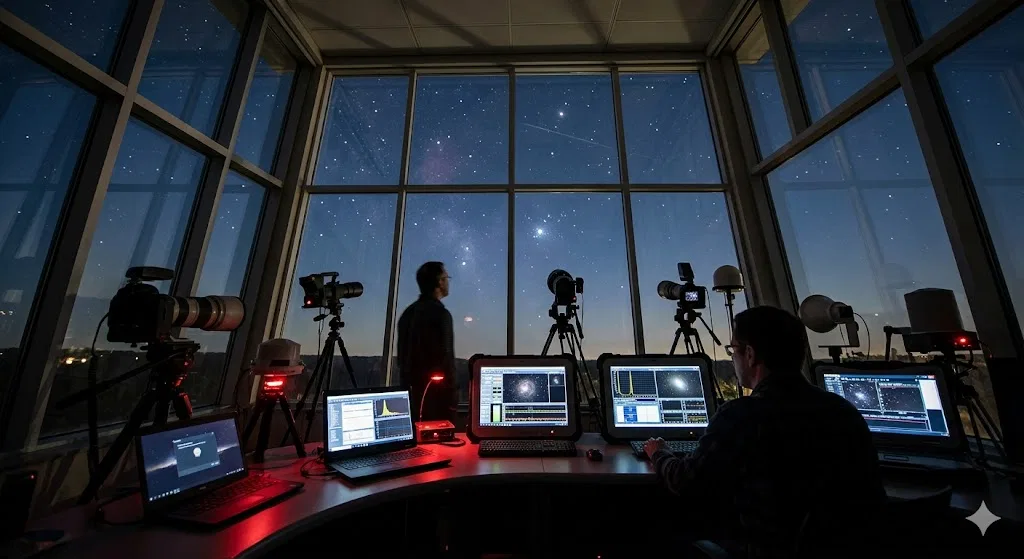
Metadata is the hidden part of evidence that lets investigators know what they are actually looking at. For a photograph, video or sensor track, it can include time, location, instrument settings, lens properties, platform motion, range, bearing, weather, altitude, calibration history and data-processing steps. NASA’s panel noted that information in the form of metadata is often missing from civilian airspace data, limiting its usefulness for understanding the size, motion or nature of UAP.[NASA Science]science.nasa.govNASA Science…
In a crash context, missing metadata creates a cascade of uncertainty. A fragment said to come from a crash site is far less useful if the exact location, recovery date, collector, storage history and contamination controls are unknown. A photograph of debris is far less useful if there is no scale, original file, camera metadata or site documentation. A witness account of a recovery convoy is far less useful if it cannot be tied to dispatch records, landowner reports, aviation incidents, weather data or military logs.
This is why NASA’s approach is uncomfortable for many crash narratives. It does not begin by asking whether a story sounds sincere or whether a government explanation feels evasive. It asks whether the available record can support a measured conclusion. Without the missing context, even a genuinely puzzling report may remain only a puzzle.
Calibrated sensors and repeatability
NASA’s central standard is that UAP study should move from episodic reports to calibrated, repeatable measurement. The agency’s public statement on the 2023 report said NASA could assist the wider government effort through systematic data calibration, multiple measurements and thorough sensor metadata. The report itself contrasts many UAP records with NASA observations, which are made using instruments designed and calibrated for specific scientific purposes.[NASA]nasa.govupdate nasa shares uap independent study report names directorUPDATE: NASA Shares UAP Independent Study Report14 Sept 2023 — We found that NASA can help the whole-of-government UAP effort through…
Calibration matters because many apparent anomalies are measurement problems. The report uses the well-known “GoFast” UAP video as an example: the object appears to skim above the ocean at high speed, but analysis of the display data suggests a less extraordinary interpretation, with apparent speed affected by the motion of the sensor platform and parallax. NASA’s broader point is not that every case is solved this way, but that claims about speed, distance, acceleration or size are unreliable unless the measuring system is understood.[NASA Science]science.nasa.govNASA Science…
For a claimed crash, calibrated evidence would be even more important. A real impact should allow investigators to cross-check multiple kinds of data: physical material, ground disturbance, radar or air-traffic records, acoustic or seismic detections, satellite imagery, emergency response logs and laboratory analyses. Each source can be wrong or incomplete on its own. Together, properly timed and documented sources can either converge on a coherent event or expose contradictions.
Repeatability does not mean that the crash itself must happen again. It means that the evidence can be independently examined. A metal sample can be retested. A chain-of-custody log can be audited. A site can be mapped. Lab methods can be replicated. Competing explanations can be checked against the same record. NASA’s panel emphasised that scientific data should support falsifiable hypotheses, including the “null hypothesis” that a UAP is consistent with known natural or technological causes.[NASA Science]science.nasa.govNASA Science…
Why reports fall short of crash proof
Many UFO crash claims fall short because they invert the evidential burden. They begin with a remarkable conclusion, then interpret gaps as confirmation: missing records become proof of concealment, ambiguous debris becomes proof of exotic engineering, and ordinary secrecy becomes proof of non-human origin. NASA’s UAP framework pushes in the opposite direction. The more world-changing the claim, the more it must rule out conventional explanations before reaching an extraordinary one.
This does not mean every prosaic explanation is automatically correct. It means that ordinary possibilities must be tested first. NASA’s report gives examples from science where initially puzzling phenomena later became understood through better data, including pulsars, gamma-ray bursts and atmospheric sprites. The lesson is not that surprises never happen. It is that the route from surprise to discovery runs through systematic collection, hypothesis testing, new observational techniques and open scientific discussion.[NASA Science]science.nasa.govNASA Science…
Crash claims also run into a specific problem: physical evidence should be easier to verify than a fleeting sighting. If an object hit the ground, investigators would expect some combination of impact evidence, fragments, heat effects, contamination pattern, environmental disturbance, official response records, transport documentation, photographs, witness timelines and laboratory results. When a case depends mainly on late recollections, anonymous sources or alleged documents that cannot be authenticated, it has not reached the level NASA describes as necessary for definitive conclusions.
AARO, the US Department of Defense office designated by Congress as the lead federal organisation for resolving UAP, has reached a similar public position on the broader crash-retrieval narrative. Its 2024 historical report said it found no verifiable evidence that the US government or private industry has ever had access to extraterrestrial technology, and its public material describes a rigorous scientific and data-driven approach to UAP. NASA Science+2U.S. Department of War[science.nasa.gov]science.nasa.govNASA Science…
The key word is “verifiable”. NASA’s standard does not require prior disbelief. It requires evidence that can be checked without trusting the story’s most fragile link.

What good crash evidence would need to show
A NASA-style evidential standard for an alleged UFO crash would not be satisfied by a single spectacular item. It would require a package of evidence strong enough to connect object, event, site and interpretation.
A persuasive crash record would need:
- Documented origin: a precise recovery location, time, date and discovery circumstances, with contemporaneous records rather than only later testimony.
- Chain of custody: a clear record of who collected, stored, transported and tested any material, including opportunities for contamination or substitution.
- Instrument context: radar, satellite, seismic, acoustic, air-traffic, weather or other records tied to the same time and place.
- Calibrated measurement: data from instruments whose limits, settings and calibration history are known.
- Independent analysis: laboratories able to repeat tests on material composition, isotopes, structure, heat effects and manufacturing signatures.
- Baseline comparison: comparison against aircraft parts, balloons, satellites, meteoritic material, industrial debris, military test articles and known aerospace materials.
- Falsifiable alternatives: explicit testing of mundane explanations before any non-human or extraterrestrial interpretation is treated as plausible.
This standard is demanding, but not unfair. It is close to how other high-stakes scientific claims are handled. NASA’s own astrobiology community has worked on standards of evidence for detecting life beyond Earth, recognising that life-detection claims are difficult, public-facing and likely to require multiple measurements and approaches.[NASA Science]science.nasa.govScience Astrobiology Resources for Life Detection MissionsScience Astrobiology Resources for Life Detection Missions
The analogy is useful because it avoids two common mistakes. It does not say “alien technology is impossible”, and it does not say “an unexplained object is therefore alien technology”. It says confidence should rise only when evidence becomes more complete, more independently testable and less dependent on one interpretation.
The governance lesson for UFO crashes
NASA’s UAP work is a governance intervention as much as a scientific one. It shifts the UFO crash conversation away from secrecy, stigma and anecdote, and towards public standards: calibrated data, shared methods, transparent repositories and cooperation between civilian science and government investigators. NASA’s report states that AARO is the lead federal organisation for resolving UAP, while NASA can complement that work through open scientific inquiry, public data archives and technical expertise.[NASA Science]science.nasa.govNASA Science…
That division of labour matters. Military systems may capture some of the most relevant UAP data, but classification can prevent full public analysis. NASA’s report notes that classified observations can deepen public mystery and conspiracy thinking even when classification is driven by security concerns rather than by the content of the images themselves. NASA’s comparative strength is not crash retrieval; it is the discipline of open, calibrated, reproducible science.[NASA Science]science.nasa.govNASA Science…
For readers assessing alleged UFO crashes, NASA’s standard offers a practical filter. The question is not simply “Could this be true?” but “What would make this testable?” A claim becomes stronger when it provides original records, measurable artefacts, independent lab access and cross-confirming data. It remains weak when it relies on missing documents, untestable samples, vague locations, inconsistent timelines or conclusions that run ahead of the evidence.
The result is a stricter but clearer way to think about UFO crashes. NASA does not prove that every crash story is false. It shows why, so far, the evidential threshold for crash proof is much higher than a compelling narrative — and why a genuine breakthrough would have to look less like folklore and more like a transparent, well-documented scientific investigation.

Amazon book picks
Further Reading
Books and field guides related to What NASA Says Good UAP Evidence Needs. Use these as the next step if you want deeper reading beyond the article.
The Demon-Haunted World
Rating: 4.5/5 from 43 Google Books ratings
Matches NASA-style emphasis on evidence, data quality and skepticism.
eBay marketplace picks
Marketplace Samples
Live-tested eBay searches with available results related to this page.


Endnotes
1.
Source: science.nasa.gov
Link:https://science.nasa.gov/wp-content/uploads/2023/09/uap-independent-study-team-final-report.pdf
Source snippet
NASA Science...
2.
Source: nasa.gov
Title: update nasa shares uap independent study report names director
Link:https://www.nasa.gov/news-release/update-nasa-shares-uap-independent-study-report-names-director/
Source snippet
UPDATE: NASA Shares UAP Independent Study Report14 Sept 2023 — We found that NASA can help the whole-of-government UAP effort through...
3.
Source: war.gov
Title: dod report discounts sightings of extraterrestrial technology
Link:https://www.war.gov/News/News-Stories/Article/Article/3701297/dod-report-discounts-sightings-of-extraterrestrial-technology/
4.
Source: aaro.mil
Link:https://www.aaro.mil/
5.
Source: science.nasa.gov
Title: Science Astrobiology Resources for Life Detection Missions
Link:https://science.nasa.gov/astrobiology/researchers/life-detection-resources/
6.
Source: nasa.gov
Link:https://www.nasa.gov/
7.
Source: science.nasa.gov
Link:https://science.nasa.gov/uap/
8.
Source: nasa.gov
Title: nasa to release discuss [unidentified]({{ ‘unidentified/’ | relative_url }}) anomalous phenomena report
Link:https://www.nasa.gov/news-release/nasa-to-release-discuss-unidentified-anomalous-phenomena-report/
9.
Source: apod.nasa.gov
Link:https://apod.nasa.gov/apod/ap260611.html
10.
Source: science.nasa.gov
Link:https://science.nasa.gov/uap/faqs/
11.
Source: astrobiology.nasa.gov
Link:https://astrobiology.nasa.gov/news/caps-study-on-the-community-report-from-the-biosignatures-standards-of-evidence-workshop/
12.
Source: jpl.nasa.gov
Title: says mars rover discovered potential biosignature last year
Link:https://www.jpl.nasa.gov/news/nasa-says-mars-rover-discovered-potential-biosignature-last-year/
13.
Source: aaro.mil
Title: UNCLASSIFIED FY23 Consolidated Annual Report on UAP Oct 25 2023 1236
Link:https://www.aaro.mil/Portals/136/PDFs/UNCLASSIFIED-FY23_Consolidated_Annual_Report_on_UAP-Oct_25_2023_1236.pdf
14.
Source: aaro.mil
Title: AARO Historical Record Report Vol 1 2024
Link:https://www.aaro.mil/Portals/136/PDFs/AARO_Historical_Record_Report_Vol_1_2024.pdf
15.
Source: aaro.mil
Title: Official UAP Imagery
Link:https://www.aaro.mil/UAP-Cases/Official-UAP-Imagery/
16.
Source: aaro.mil
Title: Next UAP Report Documents
Link:https://www.aaro.mil/Next-AARO-Home-redesign/Next-Parent/Next-UAP-Report-Documents/
17.
Source: aaro.mil
Title: Congressional Press Products
Link:https://www.aaro.mil/Congressional-Press-Products/
18.
Source: aaro.mil
Title: 2025 UAP Workshop Paper
Link:https://www.aaro.mil/Portals/136/PDFs/Information%20Papers/2025_UAP_Workshop_Paper.pdf
19.
Source: media.defense.gov
Title: DOPSR 2024 0263 AARO HISTORICAL RECORD REPORT VOLUME 1 2024
Link:https://media.defense.gov/2024/Mar/08/2003409233/-1/-1/0/DOPSR-2024-0263-AARO-HISTORICAL-RECORD-REPORT-VOLUME-1-2024.PDF
20.
Source: media.defense.gov
Title: FY24 CONSOLIDATED ANNUAL REPORT ON UAP 508
Link:https://media.defense.gov/2024/Nov/14/2003583603/-1/-1/0/FY24-CONSOLIDATED-ANNUAL-REPORT-ON-UAP-508.PDF
21.
Source: astrobiology.com
Link:https://astrobiology.com/2022/10/independent-review-of-the-community-report-from-the-biosignature-standards-of-evidence-workshop.html
22.
Source: war.gov
Title: department of defense releases the annual report on unidentified anomalous phen
Link:https://www.war.gov/News/Releases/Release/Article/3964824/department-of-defense-releases-the-annual-report-on-unidentified-anomalous-phen/
Additional References
23.
Source: youtube.com
Title: Replay! NASA’s Release of the Unidentified Anomalous Phenomena Report
Link:https://www.youtube.com/watch?v=nuBMnluJfs0
Source snippet
WATCH LIVE: NASA releases report on 'unidentified anomalous phenomena' -- better known as UFO's...
24.
Source: youtube.com
Title: Public Meeting on Unidentified Anomalous Phenomena (Official NASA Broadcast)
Link:https://www.youtube.com/watch?v=bQo08JRY0iM
Source snippet
Replay! NASA's Release of the Unidentified Anomalous Phenomena Report...
25.
Source: youtube.com
Title: Unidentified Anomalous Phenomena Independent Study Report
Link:https://www.youtube.com/watch?v=TQcqOW39ksk
Source snippet
Public Meeting on Unidentified Anomalous Phenomena (Official NASA Broadcast)...
26.
Source: arxiv.org
Title: arXiv Community Report from the Biosignatures Standards of Evidence Workshop
Link:https://arxiv.org/abs/2210.14293
27.
Source: nationalacademies.org
Link:https://www.nationalacademies.org/read/26621/chapter/4
28.
Source: aui.edu
Link:https://aui.edu/aaro-releases-report-on-unidentified-anomalous-phenomena-uap/
29.
Source: nationalacademies.org
Link:https://www.nationalacademies.org/read/26621/chapter/6
30.
Source: facebook.com
Link:https://www.facebook.com/SpaceWalkOfFame/posts/nasa-has-public-meeting-may-31st-on-ufos-ahh-uapsnasa-is-holding-a-public-meetin/946742936296876/
31.
Source: reddit.com
Link:https://www.reddit.com/r/space/comments/16ij6ui/nasa_shares_unidentified_anomalous_phenomena/
32.
Source: reddit.com
Link:https://www.reddit.com/r/Futurology/comments/16ijwyl/nasa_shares_unidentified_anomalous_phenomena/
Topic Tree